
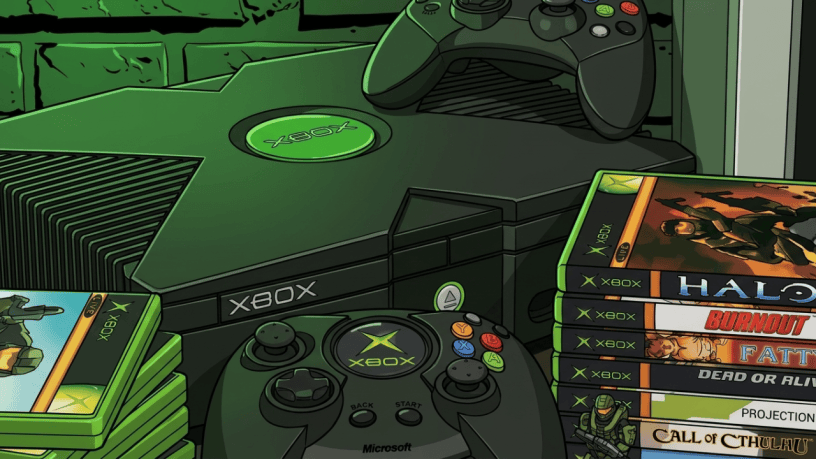
The original Xbox arrived in 2001 and quickly established itself as a serious competitor in the console gaming market. While Microsoft introduced players to major franchises like Halo, Fable, and Forza Motorsport, the console also received plenty of unusual and ambitious games that never achieved the same level of recognition. Some experimented with innovative gameplay mechanics, others introduced ideas that wouldn’t become popular until years later, and a few pushed the original Xbox hardware in ways that were impressive for their time. From experimental action adventures to groundbreaking multiplayer experiences, these forgotten titles deserve another look. Here are 10 forgotten Xbox games that were ahead of their time.
10 Forgotten Xbox Games That Were Ahead of Their Time
1. Steel Battalion (2002)
Developer: Capcom
Publisher: Capcom
Genre: Mech Simulation
Original Release: 2002
When it comes to ambitious video game experiments, few titles can compete with Steel Battalion. Released exclusively for the original Xbox, this mech simulation attempted to deliver one of the most immersive giant robot experiences ever created for a home console.
Players take control of enormous military machines known as Vertical Tanks (VTs), operating them from a first-person cockpit while battling enemy forces across a variety of missions. However, what truly separated Steel Battalion from other mech games was its extraordinary controller.
Rather than using a standard Xbox controller, the game required a massive custom control panel featuring approximately 40 buttons, two joysticks, and three foot pedals. Players even had to follow a startup procedure to get their machines operational, complete with switches, levers, and a dedicated ignition button. The controller also included an emergency ejection button, and failing to eject before the destruction of your machine could result in losing your campaign progress.
This level of mechanical interaction was incredibly ambitious for a console game in 2002. Today, Steel Battalion remains one of the most unusual gaming experiences ever released, demonstrating how far developers were willing to go to create a more immersive simulation.
2. Phantom Dust (2004)
Developer: Microsoft Game Studios / Yukes
Publisher: Microsoft Game Studios
Genre: Action / Strategy
Original Release: 2004
Phantom Dust was one of the most unusual games released for the original Xbox, combining elements of action combat, collectible card games, and strategic ability management into a single experience.
Set in a post-apocalyptic world where humanity lives underground, the game follows a group of survivors known as Espers. These individuals possess supernatural abilities that allow them to manipulate mysterious particles called Dust, giving them access to powerful attacks and defensive techniques.
What made the gameplay particularly interesting was its skill-based combat system. Instead of simply collecting weapons and equipment, players assembled arsenals of abilities that could be used during battles. These skills included offensive attacks, defensive techniques, movement abilities, and various supernatural powers.
The result was a fascinating combination of real-time arena combat and deck-building strategy. Players needed to manage their available abilities while adapting their tactics to the opposing Esper.
Interestingly, Phantom Dust originally received its Japanese release in 2004, but its planned North American release was canceled despite the English localization already being completed. It eventually received a free re-release on Xbox One and Windows 10 in 2017.
Its unusual combination of mechanics was years ahead of what many players expected from a console action game, making it one of the original Xbox’s most fascinating hidden gems.
3. Breakdown (2004)
Developer: Namco
Publisher: Namco
Genre: First-Person Action / Adventure
Original Release: 2004
Before immersive first-person action games became increasingly popular, Namco released Breakdown, an ambitious Xbox exclusive that experimented with placing players directly inside the protagonist’s perspective.
The story follows Derrick Cole, a man who awakens inside a mysterious research facility with no memory of his past. As he attempts to escape, he discovers that he possesses extraordinary abilities and becomes involved in a dangerous conspiracy involving powerful enemies and secret experiments.
What made Breakdown particularly interesting was its commitment to first-person immersion. Players experienced practically everything through Derrick’s eyes, including hand-to-hand combat, weapon handling, interactions with objects, and even ordinary activities such as eating and drinking.
The game also featured a combination of shooting and martial arts combat, allowing players to punch, kick, block, and fight enemies without switching to a traditional third-person fighting perspective.
Although its controls and combat mechanics could be frustrating, its approach to first-person storytelling was remarkably ambitious for 2004. Some of its ideas resemble mechanics that would become more common in later immersive action games.
Breakdown might not have been perfect, but it was certainly willing to experiment with ideas that many other developers weren’t exploring at the time.
4. Blinx: The Time Sweeper (2002)
Developer: Artoon
Publisher: Microsoft Game Studios
Genre: Platformer
Original Release: 2002
Blinx: The Time Sweeper was one of Microsoft’s most unusual attempts to introduce a new mascot character during the early years of the Xbox. However, its biggest selling point wasn’t its colorful protagonist or platforming gameplay. It was the ability to manipulate time.
Players control Blinx, a cat-like character working at a mysterious time factory. When a group of time monsters causes trouble and a princess is kidnapped, Blinx sets out to restore order using his specialized TimeSweeper vacuum cleaner.
The game’s defining mechanic allowed players to manipulate the flow of time by collecting different time crystals. These abilities included rewinding, pausing, slowing down, and fast-forwarding time. One particularly interesting feature was the ability to record Blinx’s actions and replay them, effectively allowing players to create a second version of their character to help solve certain challenges.
These mechanics were integrated into both the platforming and puzzle-solving sections, creating gameplay opportunities that were quite unusual for the early 2000s.
Although the game received mixed reactions, its time-manipulation mechanics were an ambitious experiment. The ability to record and replay actions, in particular, was an interesting idea that could have been developed much further in future installments.
With modern technology, a new Blinx adventure could potentially deliver an incredible time-manipulation platformer.
5. Gunvalkyrie (2002)
Developer: Smilebit
Publisher: Sega
Genre: Third-Person Action
Original Release: 2002
Developed by Smilebit, the studio behind Jet Set Radio, Gunvalkyrie was an incredibly unusual action game that combined fast-paced shooting with challenging aerial movement.
Set in an alternate version of 1906, the story takes place in a world where humanity has developed advanced technology capable of interplanetary travel. Players control either Kelly O’Lenmey or Saburouta Mishima, members of an elite military organization known as the Gunvalkyrie.
Their mission is to investigate a dangerous alien outbreak on the planet Tir na Nog, where hostile creatures threaten the survival of the human expedition.
What made the gameplay particularly interesting was its movement system. Rather than relying on traditional running and jumping, players used jetpack-style boost mechanics to launch themselves through the air, hover, and navigate challenging environments.
Mastering the controls required considerable practice, especially when combining aerial movement with shooting and avoiding enemy attacks. The result was a fast and demanding experience that rewarded players who invested time in learning its mechanics.
While Gunvalkyrie could be frustrating for newcomers, its emphasis on high-speed aerial movement was an ambitious idea that would have benefited enormously from modern controller design and more accessible tutorials.
6. Otogi: Myth of Demons (2003)
Developer: FromSoftware
Publisher: Sega
Genre: Action / Hack and Slash
Original Release: 2003
Long before Dark Souls made FromSoftware one of the most recognizable developers in gaming, the studio was creating some fascinating action games for the original Xbox. One of its most overlooked releases was Otogi: Myth of Demons, a dark fantasy adventure inspired by Japanese mythology.
Players take control of Raikoh, a resurrected warrior tasked with cleansing a land overwhelmed by supernatural creatures and demonic forces. Armed with powerful weapons and supernatural abilities, Raikoh must battle increasingly dangerous enemies while exploring beautifully designed environments.
One of the game’s most impressive features was its environmental destruction. Buildings, trees, and other objects could be damaged or destroyed during combat, making battles feel considerably more dynamic than those in many contemporary action games.
The game also featured an unusual visual presentation, combining atmospheric lighting, elaborate environments, and stylish character designs to create a distinctive fantasy world.
Considering its 2003 release, Otogi was an impressive technical achievement. Its combination of fast-paced combat, supernatural abilities, and environmental destruction helped it stand apart from other action games of the generation.
A modern continuation of this series would be particularly exciting, especially considering how much FromSoftware has evolved as a developer since its original release.
7. MechAssault (2002)
Developer: Day 1 Studios
Publisher: Microsoft Game Studios
Genre: Third-Person Shooter / Mech Combat
Original Release: 2002
MechAssault was one of the original Xbox’s most important multiplayer releases, helping demonstrate the potential of Microsoft’s Xbox Live service during its early days.
Based on the BattleTech universe, the game puts players in control of massive BattleMechs equipped with powerful weapons, including machine guns, missiles, and devastating energy-based attacks. Its campaign takes players through a series of missions involving large-scale battles against enemy forces.
However, what really made MechAssault stand out was its combination of accessible mech combat, destructible environments, and online multiplayer.
Unlike many earlier mech games, which often focused heavily on simulation mechanics, MechAssault delivered a faster and more approachable action experience. Players could jump directly into combat without spending hours learning complicated controls.
Its destructible environments were another impressive feature. Buildings could collapse under sustained weapons fire, allowing players to turn entire sections of the battlefield into rubble.
The game also supported Xbox Live multiplayer, allowing players to compete against others online in different game modes. At a time when online console gaming was still developing, MechAssault demonstrated how exciting connected multiplayer experiences could become.
It helped establish the original Xbox as a serious platform for online gaming and remains an important part of the console’s history.
8. Crimson Skies: High Road to Revenge (2003)
Developer: FASA Studio
Publisher: Microsoft Game Studios
Genre: Arcade Flight Combat
Original Release: 2003
If you’ve ever wanted to experience an alternate version of the 1930s filled with air pirates, heavily armed aircraft, and enormous flying battleships, Crimson Skies: High Road to Revenge is exactly the kind of game you should revisit.
Set in an alternate history where the United States has fractured into competing territories, the game follows Nathan Zachary, a daring air pirate who becomes involved in a dangerous conflict against a powerful organization.
Unlike traditional flight simulators, Crimson Skies focused on accessible arcade-style aerial combat. Players could pilot a variety of aircraft, engage enemy fighters, attack ground targets, and take part in spectacular battles against enormous airships.
However, its most impressive feature was its online multiplayer support. Through Xbox Live, players could compete in different aerial combat modes, including deathmatches, team battles, capture-the-flag matches, and the particularly unusual Wild Chicken mode.
The game also supported online matchmaking features and voice communication, helping create a more connected multiplayer experience.
Considering how much online gaming has evolved since then, it’s easy to overlook just how exciting these features were during the early Xbox Live era. Crimson Skies delivered a combination of arcade flight combat and online multiplayer that deserves far more recognition today.
9. Phantom Crash (2002)
Developer: Genki
Publisher: Phantagram / Encore Software
Genre: Mech Combat
Original Release: 2002
Phantom Crash was another unusual mech game released during the original Xbox’s early years. Rather than focusing entirely on traditional giant robot battles, it introduced a futuristic competitive sport built around heavily customized mechanical fighters.
Set in a dystopian version of Tokyo in the year 2031, the game revolves around a popular underground competition known as Rumbling. Players take control of customizable robots called Scoobees and compete against other pilots in futuristic arenas.
One of the game’s biggest attractions was its extensive customization system. Players could modify practically every aspect of their machines, including their armor, weapons, legs, and other mechanical components. Different configurations affected the robot’s performance, allowing players to build machines suited to their preferred fighting styles.
The game also introduced optical camouflage, allowing Scoobees to temporarily become nearly invisible. This created interesting tactical opportunities, particularly when trying to avoid incoming attacks or surprise opponents.
Another unusual feature was the ability to customize the AI chips installed in your machine. These chips could provide different forms of assistance during battles, adding another layer of customization.
With modern online multiplayer, expanded customization, and more sophisticated mech combat, Phantom Crash could become an excellent foundation for a modern competitive robot fighting game.
10. Deathrow (2002)
Developer: Southend Interactive
Publisher: Ubisoft
Genre: Futuristic Sports / Action
Original Release: 2002
Deathrow was one of the strangest and most ambitious sports games released for the original Xbox. Instead of traditional sporting competitions, it introduced players to a brutal futuristic sport known as Blitz, where teams competed in violent arena matches.
The objective was to score points by throwing an electrified disc into the opposing team’s goal. However, players weren’t limited to conventional sporting tactics. They could also attack, punch, and knock opposing players unconscious to gain an advantage.
The game featured 18 playable teams, each with different characteristics and abilities. Players could also develop their teams through a league mode, earning credits to improve their squads and build more competitive lineups.
One of the most interesting aspects was its multiplayer support. Players could compete locally through split-screen multiplayer, while two Xbox consoles could be connected through a local network to support up to eight players.
Combining futuristic sports, hand-to-hand combat, team strategy, and competitive multiplayer, Deathrow was an unusual concept that deserved considerably more attention.
A modern version could introduce online leagues, additional arenas, deeper team customization, and even more elaborate combat mechanics. It’s an excellent example of an original Xbox exclusive that deserves to be remembered.
Final Thoughts
The original Xbox was home to far more than just popular franchises like Halo, Fable, and Project Gotham Racing. Its library contained some genuinely ambitious experiments that challenged traditional gaming conventions and introduced mechanics that would become increasingly familiar in later generations.
Whether it was the enormous custom controller of Steel Battalion, the supernatural card-based combat of Phantom Dust, the first-person immersion of Breakdown, or the time-manipulation mechanics of Blinx: The Time Sweeper, these games demonstrated that developers were willing to take creative risks.
Some of these experiments were more successful than others, but they all contributed something interesting to the original Xbox’s history. Many deserve another opportunity through modern remakes, sequels, or spiritual successors.
Which of these forgotten Xbox games do you think was the most ahead of its time? Are there any other original Xbox titles you believe deserve recognition? Let us know in the comments!

