
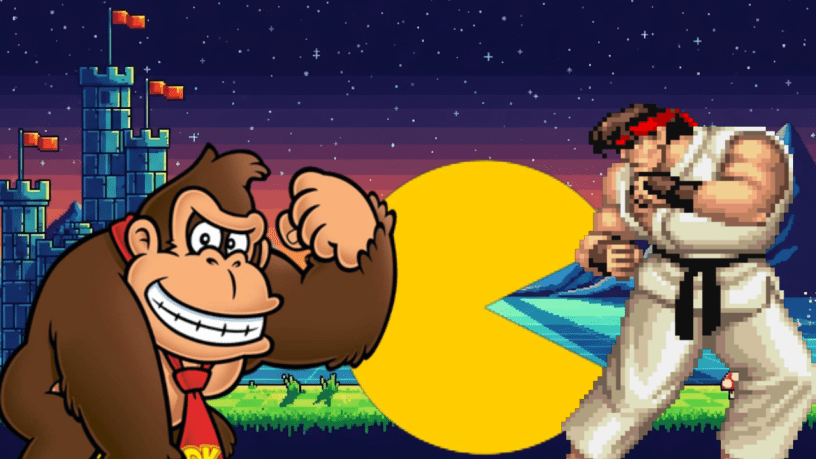
From Pac-Man to Street Fighter II, these arcade legends didn’t just fill quarters — they changed gaming forever. Here are the top 10 greatest arcade games that defined a generation.
greatest arcade games, classic arcade legends, iconic arcade games, Pac-Man, Space Invaders, Street Fighter II, Donkey Kong, Galaga, Mortal Kombat
Before home consoles ruled living rooms, arcades were the place to play. Neon lights, buzzing machines, the clatter of coins — that whole vibe created a cultural phenomenon. Arcade games didn’t just entertain; they pioneered genres, inspired rivalries, and shaped the very DNA of gaming.
These are the games that went beyond being popular — they defined an era. Each one on this list did something new, influenced countless titles after it, and left a legacy still felt in gaming culture today.
Top 10 Arcade Games That Defined a Generation
Here are ten arcade classics, in rough chronological order, that had massive impact — not just in their time but for decades after.
10. Space Invaders (1978)
Developer: Taito
If you want one game that started the global arcade craze, Space Invaders is it. Its relentless waves of attacking aliens, the tension as they descend, and the innovation of a high-score system made gaming competitive and addictive. It set the standard for shooters.
9. Pac-Man (1980)
Developer: Namco
More than just gobbling dots and evading ghosts, Pac-Man became a cultural icon. It expanded who played games—girls, kids, adults—and created characters everyone recognized, not just hardcore gamers. The maze design, enemy AI, sound cues — they all contributed to its widespread appeal.
8. Donkey Kong (1981)
Developer: Nintendo
This is the game that introduced Mario (then called “Jumpman”) and gave platforming a narrative twist. Donkey Kong had us climbing ladders, dodging barrels, and feeling the weight of a story in arcade form. It bridged the gap from simple shooters and maze games to platform games that told a little story.
7. Galaga (1981)
Developer: Namco
Simple yet brilliant. Galaga improved upon earlier shooters by adding rescue mechanics (your ship getting captured and then freed), increasingly complex enemy formations, and addictive scoring loops. It’s one of those games you can drop into, play for five minutes or five hours, and it still feels compelling.
6. Ms. Pac-Man (1982)
Developer: Midway / Namco
A sequel done right. Ms. Pac-Man didn’t just re-skin Pac-Man—it added more maze variety, smarter ghost AI, new patterns, and arguably more replayability. It also broadened the audience even more.
5. Asteroids (1979)
Developer: Atari
Asteroids introduced physics-inspired controls, inertia, and the idea of blank space as a playing field. You had to plan your movement, account for momentum. It’s foundational for shooters and action games that followed.
4. Street Fighter II (1991)
Developer: Capcom
If arcade gaming had a renaissance, Street Fighter II was its champion. It transformed fighting games from novelty into a competitive staple. Unlockable characters, combos, special moves, player vs player in arcades — this is where many players first felt real rivalry gaming.
3. Mortal Kombat (1992)
Developer: Midway
Beyond the fighting game phenomenon, Mortal Kombat brought something raw and controversial: digitized graphics, violence, fatalities. It pushed boundaries of what content games could show, sparked cultural debates about ratings, and influenced how serious arcade fighters could be.
2. Defender (1981)
Developer: Williams Electronics
Wild, fast, and far ahead of its time. Defender demanded skill, reflexes, and multitasking as you defended humans from alien abduction across a scrolling landscape. It wasn’t friendly—it was brutal. But it also influenced how game challenges and complexity could be handled in arcades.
1. Tetris (1984)
Developer: Alexey Pajitnov / various ports
Though it started on computers, Tetris’ arcade effectiveness made puzzles as compelling as shooters or platformers. It crossed borders, languages, ages. Its simplicity hides deep strategy. One of the first to be played in arcades worldwide and still a staple to this day.
What Makes a Game “Define a Generation”?
These classics share certain traits:
- Accessibility & Depth — easy to pick up, hard to master.
- Iconic Design — melodies, characters, or mechanics that stick.
- Broad Appeal — not just gamers, but casual passersby, kids, families.
- Replayability / Competition — high scores, mastery, skill.
- Influence — they changed how games were made, played, or perceived.
These ten arcade games did more than entertain — they helped lay the foundation for what gaming would become. Their innovations in design, their cultural impact, and the communities that formed around them echo in indie games, modern shooters, puzzle games, and esports today.
Which arcade game defined your gaming generation? Did we miss your favorite classic that changed how you play? Let’s talk about it in the comments — because nostalgia? It’s contagious.
 Fantastic Nerdom