
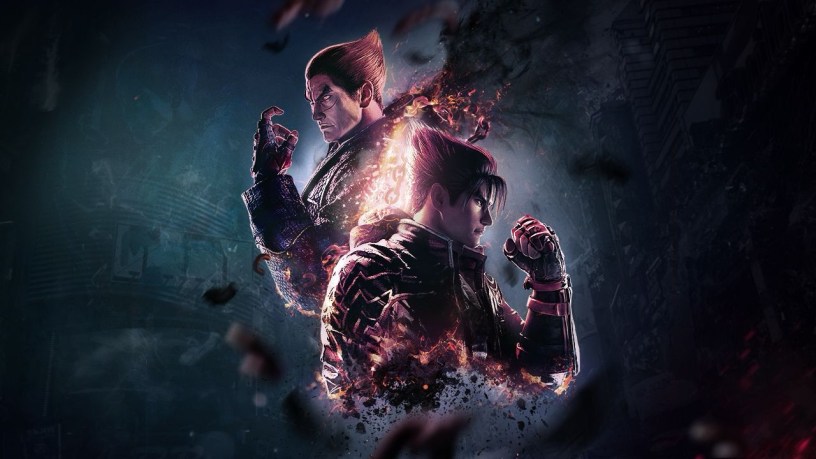
Since its explosive debut in 1994, the Tekken series has stood as a titan in the 3D fighting game genre. Known for its intricate character lore, deep combat mechanics, and stunning visual evolution, Tekken has consistently delivered exhilarating one-on-one combat across multiple generations of gaming hardware. From arcade cabinets to home consoles and even mobile devices, the King of Iron Fist Tournament has seen many iterations.
Let’s take a chronological journey through the entire Tekken saga, exploring each main entry, its popular “Tag” spin-offs, and other notable titles that have contributed to the series’ enduring legacy.
The Main Saga: The Mishima Bloodline Conflict
1. Tekken (1994)
- Release: Arcade (1994), PlayStation (1995)
- Platforms: Arcade, PlayStation
- Key Features: The groundbreaking original. Tekken was one of the earliest 3D fighting games, introducing a unique control scheme where each limb was mapped to a separate button. It laid the foundation for the Mishima Zaibatsu saga, starring Kazuya Mishima and his father, Heihachi.
2. Tekken 2 (1995)
- Release: Arcade (1995), PlayStation (1996)
- Platforms: Arcade, PlayStation
- Key Features: An ambitious sequel that significantly expanded on the original. Tekken 2 introduced a much larger roster, refined the 3D movement and combat system, and notably added sidestepping. Its console port was lauded for its wealth of content, including character-specific CGI endings that deepened the lore.
3. Tekken 3 (1997)
- Release: Arcade (1997), PlayStation (1998)
- Platforms: Arcade, PlayStation
- Key Features: Often hailed as one of the greatest fighting games of all time. Tekken 3 brought a massive leap in graphics (running on Namco System 12 hardware), faster gameplay, a significantly improved sidestep mechanic, and introduced iconic new characters like Jin Kazama, Hwoarang, and Ling Xiaoyu. The PlayStation port famously included the “Tekken Force” beat-’em-up mode and “Tekken Ball.”
4. Tekken 4 (2001)
- Release: Arcade (2001), PlayStation 2 (2002)
- Platforms: Arcade, PlayStation 2
- Key Features: A more experimental entry, Tekken 4 introduced interactive environments with walls, varied floor levels, and positional play. The game brought back Kazuya Mishima, focusing heavily on the internal Mishima family drama. While some gameplay changes were divisive, its cinematic story mode was highly praised.
5. Tekken 5 (2004)
- Release: Arcade (2004), PlayStation 2 (2005)
- Platforms: Arcade, PlayStation 2
- Key Features: A return to form that many fans consider the series’ peak. Tekken 5 refined the core gameplay, removing the divisive elements of Tekken 4 while retaining the environmental interactions. It introduced the “Rage” system (though different from later iterations) and brought back many fan-favorite characters. The PS2 version included arcade perfect ports of Tekken 1, 2, and 3.
6. Tekken 6 (2007)
- Release: Arcade (2007), PlayStation 3, Xbox 360, PSP (2009)
- Platforms: Arcade, PlayStation 3, Xbox 360, PlayStation Portable
- Key Features: The series’ debut on the seventh generation of consoles. Tekken 6 introduced “Rage Arts” (a precursor to Tekken 7’s Rage Art) and “Bound” mechanics, expanding combo possibilities. It featured destructible environments and a sprawling, albeit sometimes criticized, Scenario Campaign mode.
7. Tekken 7 (2015)
- Release: Arcade (2015), PlayStation 4, Xbox One, PC (2017)
- Platforms: Arcade, PlayStation 4, Xbox One, PC
- Key Features: A pivotal entry that concluded the long-running Mishima saga. Running on Unreal Engine 4, Tekken 7 offered stunning visuals, introduced “Rage Arts” (cinematic super moves) and “Power Crush” (armor moves), making it more accessible while retaining competitive depth. It became a significant title in the esports scene, heavily supported with DLC characters and content.
8. Tekken 8 (2024)
- Release: PlayStation 5, Xbox Series X/S, PC (2024)
- Platforms: PlayStation 5, Xbox Series X/S, PC
- Key Features: The latest installment pushes the series forward with Unreal Engine 5 graphics, delivering incredibly detailed character models and dynamic environments. Tekken 8 introduces the “Heat System” for aggressive offensive play and “Tornado” hits, aiming to provide more strategic depth and spectacle. It’s the first main game to debut on home consoles before arcades and features cross-platform play.
The Tag Series: Dream Matches and Team Combat
1. Tekken Tag Tournament (1999)
- Release: Arcade (1999), PlayStation 2 (2000)
- Platforms: Arcade, PlayStation 2 (HD Remaster on PS3)
- Key Features: A non-canonical “dream match” spin-off that brought back nearly every character from previous Tekken games. It introduced a 2-on-2 tag system, allowing players to swap characters mid-fight and perform tag combos. A beloved launch title for the PS2.
2. Tekken Tag Tournament 2 (2011)
- Release: Arcade (2011), PlayStation 3, Xbox 360, Wii U (2012)
- Platforms: Arcade, PlayStation 3, Xbox 360, Wii U
- Key Features: Building upon the original Tag Tournament’s success, TTT2 offered an even larger roster, more complex tag mechanics (like Tag Assaults and Tag Crashes), and stunning visuals. It was praised for its depth and character variety.
Other Notable Titles & Spin-offs
1. Tekken Card Challenge (1999)
- Release: WonderSwan (1999)
- Platforms: WonderSwan
- Key Features: A unique card-based fighting game released exclusively for Bandai’s handheld console, the WonderSwan. It adapted Tekken 3‘s characters and moves into a turn-based card battle format.
2. Tekken Advance (2001)
- Release: Game Boy Advance (2001)
- Platforms: Game Boy Advance
- Key Features: A 2D fighting game for Nintendo’s handheld, featuring simplified inputs and a visual style inspired by Tekken Tag Tournament. It impressively translated the Tekken feel to a portable, albeit limited, format.
3. Death by Degrees (2005)
- Release: PlayStation 2 (2005)
- Platforms: PlayStation 2
- Key Features: An action-adventure spin-off starring Nina Williams. This game shifted away from the fighting genre, focusing on exploration, stealth, and a unique “X-Ray” attack system that allowed Nina to target and break specific bones of enemies. Its reception was mixed.
4. Street Fighter X Tekken (2012)
- Release: PlayStation 3, Xbox 360, PC, PS Vita, iOS (2012)
- Platforms: PS3, Xbox 360, PC, PS Vita, iOS
- Key Features: A highly anticipated crossover developed by Capcom, blending Street Fighter‘s 2D gameplay with Tekken‘s characters and a tag system. While not a Tekken-developed game, it’s a significant entry for fans of both franchises due to its unique fusion of fighting styles.
5. Tekken Revolution (2013)
- Release: PlayStation 3 (2013)
- Platforms: PlayStation 3 (digital only)
- Key Features: A free-to-play fighting game that aimed to simplify mechanics and introduce RPG-like character leveling. It featured a smaller roster and some altered gameplay elements. The game’s servers were shut down in 2017.
6. Tekken Mobile (2018)
- Release: iOS, Android (2018)
- Platforms: iOS, Android
- Key Features: A free-to-play mobile fighting game with a simplified tap and swipe combat system and a focus on character and Waza Card collection. It also featured a story mode and live events. The game’s servers ceased operation in 2019.
The Tekken series continues to evolve, constantly pushing graphical boundaries while striving to innovate its core fighting mechanics. From the humble beginnings on the PlayStation to the stunning realism of current-gen consoles, the King of Iron Fist Tournament remains a formidable and beloved force in the fighting game world.
 Fantastic Nerdom