

The Contra series is one of the most iconic and enduring franchises in video gaming history, known for its intense run-and-gun gameplay, two-player co-op action, and brutal difficulty. Over the decades, the series has evolved through different platforms, styles, and even experiments with 3D, while still maintaining its core identity of fast-paced, no-nonsense action. From its arcade origins to its modern interpretations, the Contra franchise has seen numerous releases, each contributing to the legacy of this beloved series.
In this article, we’ll dive deep into the complete history of every Contra game, covering each installment in the series and highlighting how it shaped the franchise over time.
1. Contra (1987 – Arcade, NES)

The original Contra exploded onto the arcade scene in 1987 and soon became a household name with its release on the Nintendo Entertainment System (NES). Developed by Konami, the game introduced players to Bill Rizer and Lance Bean, two elite commandos tasked with saving the world from an alien invasion. Contra became famous for its tight controls, relentless action, and cooperative gameplay, which allowed two players to team up and take on waves of enemies.
The NES port, released in 1988, featured some changes, but it stayed true to the arcade version and became a massive hit, solidifying the Contra name. The game also popularized the Konami Code (↑ ↑ ↓ ↓ ← → ← → B A), which granted players 30 extra lives—a crucial tool for surviving the game’s difficulty.
Key Features:
- Introduced the core run-and-gun, side-scrolling gameplay
- Featured side-scrolling and pseudo-3D levels
- Two-player co-op mode, one of the earliest examples of this feature
2. Super Contra (1988 – Arcade, NES)

A year after the original, Super Contra hit arcades with faster, more challenging gameplay and more varied level designs. It introduced overhead-view stages that broke up the standard side-scrolling action, adding more depth to the gameplay. The game was ported to the NES in 1990 under the name Super C, where it retained much of its arcade intensity.
While Super Contra built on the formula of the first game, it also introduced new enemies, more complex environments, and an even higher difficulty curve, cementing Contra as one of the most challenging series in gaming.
Key Features:
- Faster, more challenging gameplay than its predecessor
- Introduced overhead stages alongside traditional side-scrolling levels
- Even more intense boss battles
3. Operation C (1991 – Game Boy)
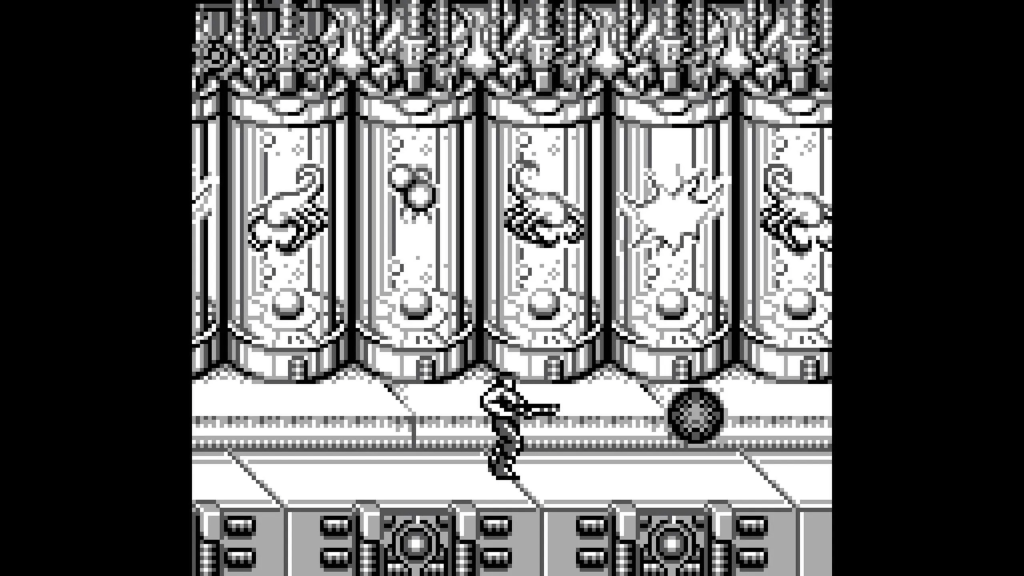
The Contra series made its handheld debut with Operation C on the Game Boy. While it was the first game not to feature co-op, Operation C kept the core elements of Contra intact, offering tight side-scrolling action and challenging gameplay. The story followed Bill Rizer once again, as he took on a new alien threat.
Despite the limitations of the Game Boy, Operation C was well-received and proved that Contra could work on portable systems. It also introduced the homing gun, which became a staple of the series.
Key Features:
- First handheld Contra game
- Introduced the homing gun
- Single-player only but retained the core Contra gameplay
4. Contra III: The Alien Wars (1992 – SNES)
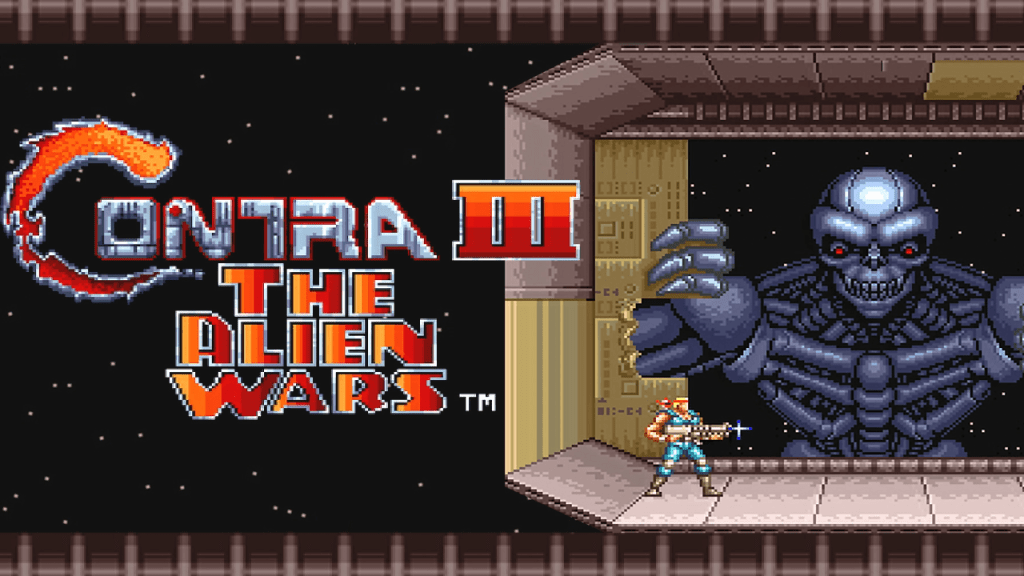
Released on the Super Nintendo Entertainment System, Contra III: The Alien Wars is often considered one of the best games in the series. Set in the future, the game followed Bill and Lance as they fought to save Earth from a full-scale alien invasion. Contra III introduced new mechanics like carrying two weapons, performing evasive somersaults, and using screen-clearing bombs. The game also featured vehicle segments and mode-7-enhanced top-down stages.
Contra III was praised for its intense action, stunning 16-bit graphics, and excellent level design. It maintained the brutal difficulty of its predecessors while introducing modern elements that kept the gameplay fresh.
Key Features:
- Gorgeous 16-bit graphics and mode-7-enhanced stages
- New gameplay mechanics like dual-wielding weapons and bombs
- Intense, fast-paced action with varied environments
5. Contra: Hard Corps (1994 – Sega Genesis)
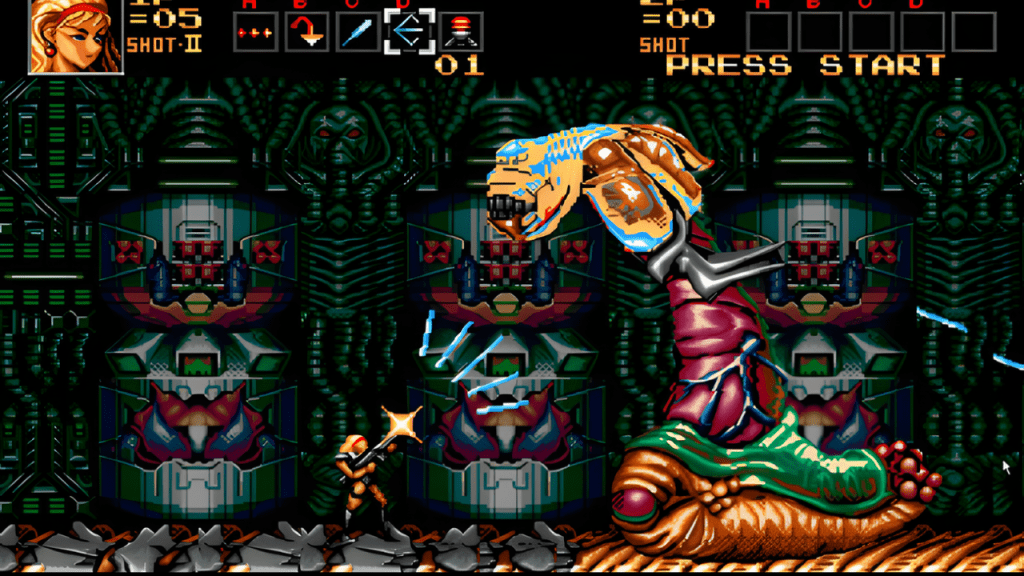
Contra: Hard Corps was the first game in the series to appear on the Sega Genesis and introduced several new features, including multiple playable characters. Players could choose from four characters: Ray, Sheena, Brad, and Fang (a cyborg wolf), each with their own unique weapons and abilities.
The game was known for its branching storylines and multiple endings, giving players more replay value. The challenge level was even higher than previous entries, making Contra: Hard Corps one of the most difficult games in the series.
Key Features:
- First Contra game on the Sega Genesis
- Four playable characters with unique abilities and weapons
- Multiple story paths and endings
6. Contra: Legacy of War (1996 – PlayStation, Sega Saturn)

Contra: Legacy of War marked the series’ first attempt to transition to 3D gameplay, released on the PlayStation and Sega Saturn. While the game introduced 3D environments and an over-the-shoulder perspective, it was not well-received. The controls were awkward, and the camera angles made the fast-paced action feel clunky and frustrating. This entry is widely considered a misstep in the series.
Key Features:
- First Contra game to use 3D environments
- Over-the-shoulder camera and full 3D movement
- Poor reception due to awkward controls and camera issues
7. C: The Contra Adventure (1998 – PlayStation)

Following the failure of Legacy of War, C: The Contra Adventure was another attempt to bring the series into 3D. This game mixed 2D side-scrolling levels with 3D segments, but like its predecessor, it struggled with clunky controls and lackluster gameplay. While some of the 2D sections were reminiscent of classic Contra, the game ultimately failed to live up to the series’ legacy.
Key Features:
- Combination of 2D and 3D gameplay
- Continued the 3D experiment, with mixed results
- Another poorly received entry in the series
8. Contra: Shattered Soldier (2002 – PlayStation 2)

With Contra: Shattered Soldier, Konami returned to the series’ roots by bringing back 2D side-scrolling action with 3D graphics. The game focused heavily on boss battles, with each level ending in a massive, multi-stage boss fight. Shattered Soldier also introduced a weapon system that allowed players to switch between three types of guns at any time, adding a layer of strategy to the gameplay.
The game was praised for its visuals, intense action, and brutal difficulty, marking a return to form for the Contra series after its failed 3D experiments.
Key Features:
- Return to 2D side-scrolling action with 3D graphics
- Heavy focus on boss battles
- Weapon-switching system that added strategic depth
9. Neo Contra (2004 – PlayStation 2)

Neo Contra, also released on the PlayStation 2, took the series in a new direction by introducing top-down, isometric gameplay instead of the traditional side-scrolling perspective. While the game retained the fast-paced shooting action, the change in perspective gave the gameplay a different feel. Despite its innovation, Neo Contra was received with mixed reviews—some fans appreciated the change, while others missed the classic side-scrolling action.
Key Features:
- Top-down, isometric gameplay
- Retained the fast-paced run-and-gun action
- Mixed reception due to change in perspective
10. Contra 4 (2007 – Nintendo DS)

Released to celebrate the series’ 20th anniversary, Contra 4 for the Nintendo DS was a love letter to fans of the original games. Developed by WayForward Technologies, Contra 4 returned to 2D side-scrolling gameplay, complete with modern graphics and co-op play. The game featured many elements from previous entries, including classic weapons, enemies, and bosses.
Contra 4 was praised for capturing the essence of the original games while providing updated visuals and new mechanics. The difficulty level was high, staying true to the series’ roots, and it was regarded as one of the best modern entries in the franchise.
Key Features:
- Classic 2D side-scrolling gameplay with modern updates
- Released for the Nintendo DS to celebrate the series’ 20th anniversary
- Co-op gameplay and challenging levels
11. Contra ReBirth (2009 – Wii)
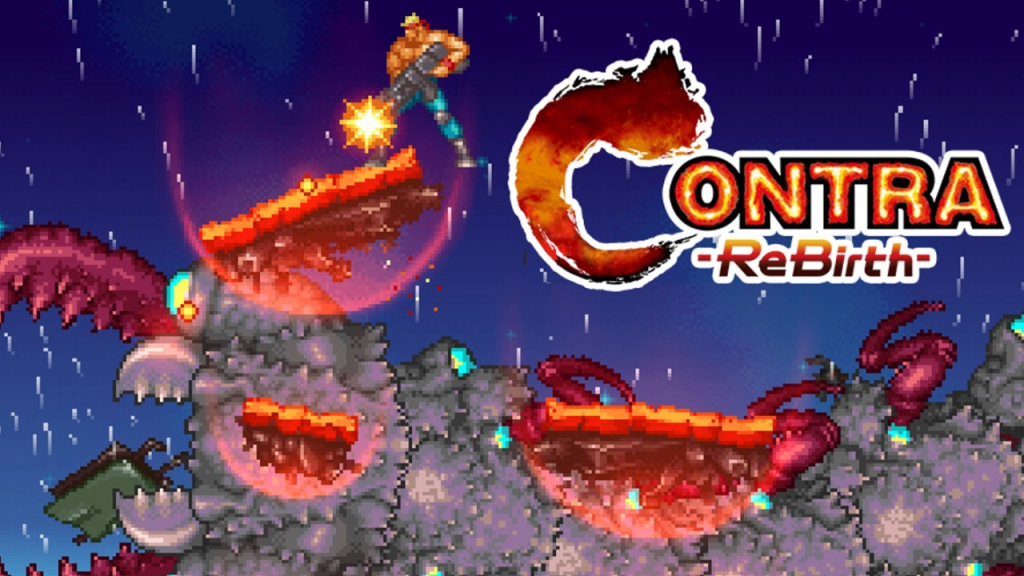
Contra ReBirth was a digital-only release for the Nintendo Wii, available through the WiiWare service. It followed in the footsteps of Contra 4, delivering a retro-inspired 2D side-scrolling experience with modern graphics and design. While it didn’t introduce many new ideas to the franchise, it was a solid, nostalgic entry that appealed to fans of classic Contra gameplay.
Key Features:
- Retro-inspired 2D side-scrolling action
- Digital-only release for WiiWare
- Faithful to the classic Contra formula
12. Contra: Rogue Corps (2019 – PlayStation 4, Xbox One, Nintendo Switch, PC)

The most recent entry in the series, Contra: Rogue Corps, was a significant departure from the traditional Contra formula. The game used twin-stick shooter mechanics and introduced a group of misfit characters, each with unique abilities and playstyles. While it offered chaotic, over-the-top action, Rogue Corps was met with largely negative reviews due to clunky controls, uninspired level design, and a lack of the classic Contra feel.
Key Features:
- Twin-stick shooter gameplay
- Unique characters with different abilities and playstyles
- Mixed to negative reception due to departure from series’ roots
Spin-offs and Alternate Releases
In addition to the mainline games, the Contra series has seen various spin-offs, compilations, and alternate releases, such as:
- Contra Force (1992 – NES): A spin-off that deviated from the typical Contra gameplay and was more of a tactical action game.
- Contra Anniversary Collection (2019 – Multiple Platforms): A compilation that includes several of the classic Contra games, including Contra, Super Contra, and Contra III: The Alien Wars.
The Contra series has had its highs and lows, but it remains one of the most influential run-and-gun franchises in gaming history. From its arcade beginnings to its modern-day revivals, Contra has consistently delivered fast-paced, high-energy action that appeals to hardcore gamers. Though the series has experimented with 3D and different gameplay styles, it’s the classic 2D side-scrolling action that fans remember most fondly.
With the release of compilations like the Contra Anniversary Collection, new generations of players can experience the brutal, adrenaline-pumping action that made Contra a legend in gaming. Whether you’re a long-time fan or a newcomer to the series, the history of Contra is a testament to the enduring appeal of challenging, high-octane gameplay.
 Fantastic Nerdom