

In the vast realm of cinematic legacies, few franchises have left as profound a mark as the “Aliens” series. Yet, beyond the silver screen, a parallel universe unfolded in the digital landscapes of the 1990s, where the terror of the xenomorphs took on a new dimension – the realm of video games. Join us on a journey back in time as we delve into the heart of the ’90s, a decade that witnessed the evolution of gaming technology and the birth of unforgettable experiences inspired by the iconic Alien movie franchise.
In this exploration, we unearth the digital counterparts of the heart-pounding suspense and extraterrestrial horror that made the Alien films legendary. From the atmospheric corridors of space stations to the pulse-pounding confrontations with the Queen Alien, the ’90s brought forth a wave of video games that sought to capture the essence of Ridley Scott and James Cameron’s masterpieces.
Aliens (1990)

“Aliens,” the 1990 run-and-gun arcade masterpiece by Konami, stands as a testament to the fusion of cinematic thrill and interactive gaming. Set in the pulse-pounding universe of the 1986 film, this two-player cooperative game lets players step into the shoes of Ellen Ripley or Corporal Hicks, armed with an array of powerful weapons from smart guns to flamethrowers.
Navigating through side-scrolling shooter levels interspersed with dynamic third-person rail shooter perspectives, players face a relentless onslaught of Aliens, each encounter pushing their skills to the limit. Boss battles punctuate the gameplay, culminating in a gripping showdown with the formidable Alien Queen, where players utilize a power exoskeleton loader for a thrilling finale.
The game made its worldwide debut at the Amusement Trades Exhibition International in London, garnering acclaim for its brilliant graphics and gory intensity. In North America, “Aliens” was declared the best new conversion kit at the American Coin Machine Exposition (ACME) and earned a Silver award for sales achievement in 1990.
Reviews at the time were overwhelmingly positive, with praise for its visuals, action-packed gameplay, and immersive atmosphere. Notably, Computer and Video Games gave it a stellar 91%, describing it as “simply brilliant” and one of the goriest coin-ops since Splatterhouse. However, not all reviews were unanimous, with CU Amiga criticizing its graphics and controls.
Decades later, the game’s legacy endures. Retro Gamer hails it as “superb,” and Den of Geek considers it “one of the best Alien games ever.” While some acknowledge its quarter-sucking nature, the game’s enduring appeal lies in its fast-paced action, graphically creepy atmosphere, and its pivotal role as one of Konami’s best-selling arcade games of its time. “Aliens” remains a cherished chapter in the Alien franchise’s gaming saga, a thrilling relic from the golden age of arcade gaming that continues to captivate enthusiasts to this day.
Alien 3 (video game) (1993)
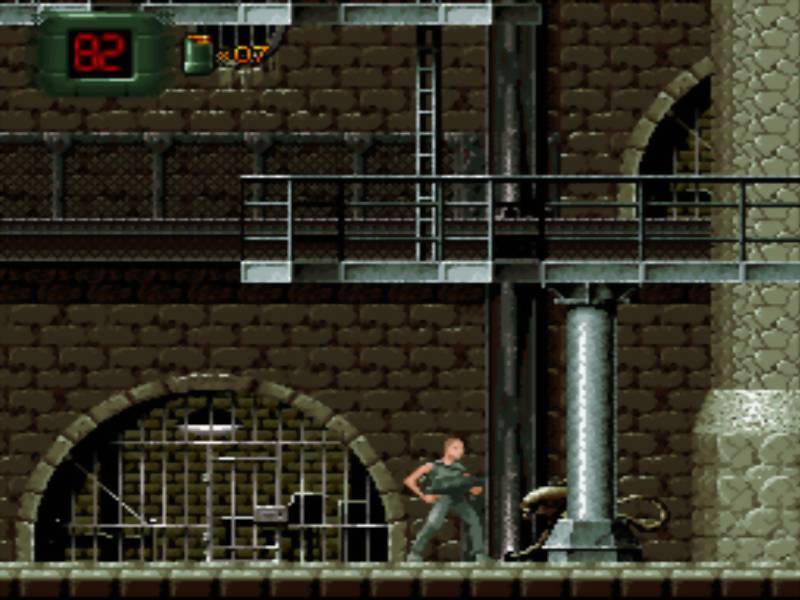
“Alien 3,” the gripping run-and-gun game based on the iconic 1992 film, ventured into the gaming realm, leaving its mark on various platforms. Developed by Probe Software, the game found its way onto the Genesis, Amiga, Commodore 64, Game Boy, Game Gear, NES, SNES, and Master System, delivering an immersive experience that captivated players worldwide.
In this side-scrolling adventure, players assume the role of Ellen Ripley, navigating the ominous Fiorina 161 prison colony featured in the film. Armed with an impressive arsenal, including pulse rifles, flamethrowers, and grenades, Ripley faces the relentless onslaught of Aliens and Facehuggers. The game’s dynamic objectives, chosen from computer terminals, range from sealing doors to rescuing prisoners, all against the backdrop of a ticking time limit.
Each version boasts unique features, with the SNES version offering six stages and a password feature, and the Sega Genesis version presenting a whopping 15 stages with larger Alien character models. The Game Boy version breaks from tradition with an overhead perspective, providing a distinct gameplay experience.
Upon its release, “Alien 3” garnered generally positive reviews, with critics applauding its music and graphics. Notable praise came from Electronic Gaming Monthly, Nintendo Power, and Sega Force, among others. The game’s diverse variety of missions, atmospheric graphics, and intense action resonated with players, earning it accolades such as the Best Movie Game (Genesis version) at the Golden Megawards.
Decades later, retrospectives continue to acknowledge the game’s impact. GamePro praised the SNES version for its originality, while Sega Force declared it the game film fans had been waiting for. Despite varying opinions on different versions, “Alien 3” remains a standout entry in the Alien gaming universe, offering a thrilling and challenging experience that successfully translated the tension and horror of the film into the interactive realm.
Alien 3: The Gun (1993)
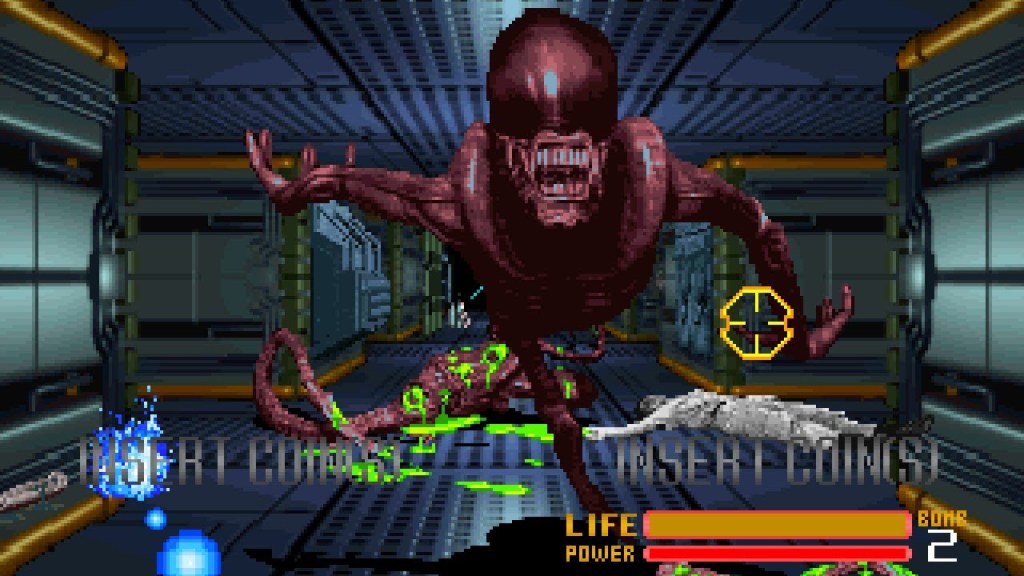
“Alien 3: The Gun,” Sega’s intense rail shooter released in 1993, transported arcade enthusiasts into the heart of extraterrestrial chaos inspired by the film Alien 3. Focused on two space Marines armed with a formidable M41A Pulse Rifle, this gripping game delivered an immersive experience that went beyond the film’s narrative.
As players wielded the iconic light gun, they faced a relentless onslaught of Alien creatures, from facehuggers to soldiers. Departing from the film’s limited Alien presence, the game expanded the horde, offering a thrilling challenge across seven levels. The mission? Reach the besieged prison colony and rescue prisoners under attack by the relentless Aliens. Boss enemies, including a colossal face hugger, added layers of intensity, and power-ups like flamethrowers kept the gameplay dynamic.
The altered plot allowed one or two players to step into the boots of United States Colonial Marines, beginning with a daring escape from the Sulaco spaceship and escalating into a relentless battle on Fiorina ‘Fury’ 161. The game faithfully recreated sets from the film, guiding players through the Mess Hall, Infirmary, Lead Works, and more. The climax, featuring a showdown with an unidentified man and an unexpected hail of enemy troops, added a cinematic edge to the gameplay.
Critics hailed “Alien 3: The Gun” as a success. In Japan, it earned recognition as the most successful arcade unit in November 1993. Retro Gamer praised its terrifying and glorious experience, surpassing other shoot-’em-ups of its time. Stephen Kleckner of GamesBeat included it in his “must-play” list of Alien titles, deeming it superior to later releases like Aliens: Extermination. Jon Thompson of All Game Guide gave it a stellar four-star rating, commending its exciting gameplay and its ability to capture the horror-filled, action-packed atmosphere of the movies.
“Alien 3: The Gun” stands as a thrilling testament to Sega’s ability to translate the Alien franchise into an engaging arcade shooter, offering players an unforgettable journey into the heart of extraterrestrial terror.
Aliens: A Comic Book Adventure (1995)

In 1995, adventure gaming took a chilling turn with “Aliens: A Comic Book Adventure,” a title developed by Cryo Interactive Entertainment and published by Mindscape for MS-DOS. Loosely inspired by the Aliens comic book series, with nods to the graphic novel Labyrinth, this game invited players to embark on a gripping interstellar investigation.
Set aboard the USS Sheridan, players assumed the role of Lt. Col. Henry Hericksen, a former Colonial Marine leading a terraforming team on a mission to unravel the mysteries behind a distress call from the remote outpost B54C. The narrative pays homage to the iconic Lance Henriksen, featuring a protagonist named Lt. Col. Henricksen and a notable encounter with a massive “Space Jockey” creature reminiscent of the first Alien movie.
The game’s development, however, was not without its challenges. Commissioned by Cryo Interactive in 1994 to create an adventure game based on the Aliens comic series, Mindscape faced legal troubles with Fox in December of the same year. Despite initial success, the project was marred by copyright issues, leading to a halt in production and staff layoffs.
Upon release, “Aliens: A Comic Book Adventure” received a mixed-to-negative reception. PC Gamer labeled it a “troubled and disappointing adventure,” while Joystick appreciated its beauty and longevity. In a retrospective analysis, Polygon acknowledged the game for making Aliens menacing and introducing new plot elements to the franchise. Thunderbolt’s Pete Worth praised the graphics but criticized tedious puzzles and combat.
However, not all reviews were favorable. GamesBeat’s Stephen Cleckner dubbed the game a “frustratingly plodding and tedious excuse,” advising potential players to opt for a Let’s Play video instead.
Despite its flaws, or perhaps because of them, “Aliens: A Comic Book Adventure” holds a unique place in the gaming universe, offering a distinct take on the Aliens narrative and eliciting both praise and criticism for its contribution to the iconic franchise.
6. Alien Trilogy (1996)
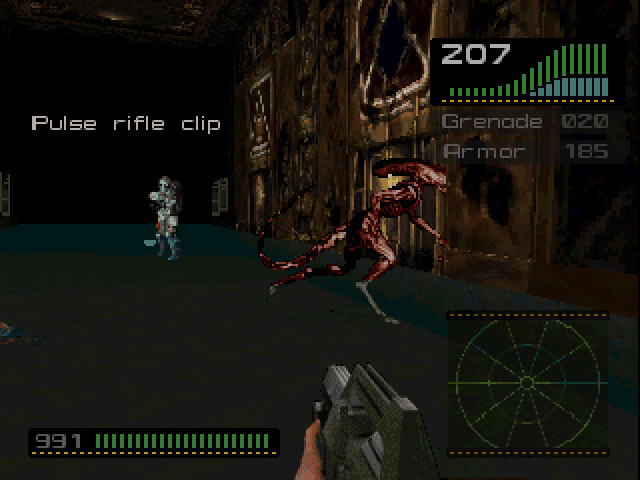
“Alien Trilogy,” a groundbreaking first-person shooter, emerged from the gaming cosmos in 1996, captivating players on PlayStation, Sega Saturn, and MS-DOS platforms. Developed by Probe Entertainment and published by Acclaim Entertainment, this game marked a milestone for Probe post-acquisition, unveiling Acclaim’s motion capture technology with much fanfare.
Immersing players in the heart-pounding universe of the first three Alien films, the game masterfully integrates iconic elements like face huggers, chest bursters, and Queen aliens across 30 levels and three epic boss encounters. Weapons from the Aliens movie, including the pulse rifle, become tools of survival for Lieutenant Ellen Ripley, the player’s avatar.
Beyond mere gameplay, “Alien Trilogy” weaves an expansive narrative. Players step into the boots of Ripley, a marine on a mission mirroring the events of the Alien film franchise. The gripping tale unfolds through text-based mission briefings and occasional CGI cut scenes, offering a fresh perspective on familiar settings and characters.
The game’s development was heralded by Acclaim’s proclamation in 1994 that “Alien Trilogy” would pioneer the use of 3D motion capture technology. The lifelike movements of the aliens were a testament to this innovation. Soundscapes enriched by whispers of cocooned colonists and spine-chilling alien screeches were directly sampled from the films.
Upon release, “Alien Trilogy” garnered acclaim from critics and players alike. Praise was showered upon its atmospheric recreation of the film series and the depth of gameplay that set it apart from other first-person shooters. The game not only resonated with the Alien fanbase but also achieved commercial success, solidifying its status as a classic in the realm of video game adaptations.
7. Aliens Online (1998)

In the late ’90s, the gaming landscape witnessed the emergence of “Aliens Online,” a groundbreaking massively multiplayer first-person shooter unleashed on Microsoft Windows in 1998. Anchored in the spine-chilling universe of the Aliens science fiction horror film, this online sensation delivered a gaming experience that resonated with fans and hardcore players alike.
The gameplay of “Aliens Online” shattered conventions, introducing asymmetric teams with unique job specializations and RPG elements. Players could immerse themselves in the intense conflict, choosing sides as either the United States Colonial Marines or the formidable Aliens. Six distinct maps set the stage for these intergalactic battles, with three additional maps added over the game’s lifespan.
Colonial Marines embraced diverse classes such as Medic, Scout, Soldier, and Heavy Weapons, employing advanced weaponry and benefiting from increased hit points as they progressed in rank. Equipped with the iconic motion detector from the film, Marines navigated the challenges of each map while contending with Aliens not always visible on the motion tracker. Proximity mines added a strategic layer to their arsenal in later versions.
The Hive Alien faction featured Face Hugger, Drone, Queen, and Empress classes, embodying the Aliens’ hive-like mentality. Aliens possessed unique capabilities, including leaping through vents and utilizing radar to dominate the entire map. Their close-range attacks, executed with tail strikes and claws, added an element of terror for Marines. The game allowed players to assume the pivotal roles of Queen or Empress, contributing to the hive’s strategic prowess.
Development of “Aliens Online” commenced in June 1997, with a budget of $450,000 USD shaping its creation. Upon release, the game embraced a free-to-download model, with updates delivered seamlessly. However, players eager to partake in the extraterrestrial warfare needed to join GameStorm for $9.95 per month. The online adventure came to an end in 2000 as the GameStorm network transitioned to Electronic Arts ownership.
Critical acclaim greeted “Aliens Online” during its debut. GameSpot’s Chris Gregson encouraged Aliens enthusiasts, stating, “With so much to gain and absolutely nothing to lose, any self-respecting Aliens fan should give Aliens Online a try.” Despite Next Generation’s desire for more variety, the game earned its place as a thrilling addition to GameStorm.
However, a retrospective by Stephen Kleckner of GamesBeat acknowledged the game’s shortcomings, citing balancing issues and suboptimal level design. Laggy connectivity exacerbated by ’90s technology and internet infrastructure plagued the gaming experience.
In a nod to its impact, “Aliens Online” secured a nomination for “Online Game of the Year” during the Interactive Achievement Awards, although the accolade ultimately eluded its grasp, landing in the hands of Ultima Online.
As we close the chapter on the thrilling world of Aliens movie franchise games from the 1990s, it’s evident that these gaming gems not only paid homage to the iconic films but also carved their own space in the hearts of fans. From intense first-person shooters to gripping adventures, each title brought a unique flavor to the extraterrestrial narrative. Despite the varying degrees of success and challenges faced by some games, the ’90s era stands as a testament to the creativity and innovation spurred by the Aliens universe. As we reflect on the pixelated terror, strategic shootouts, and immersive storylines, it’s a nostalgic journey that reminds us of the enduring allure of the sci-fi horror legacy that is Aliens.
 Fantastic Nerdom